Playground Design for Property Developers: What Buyers Should Compare
Property developers usually compare playground design by asking how the space supports placemaking, family appeal, user mix, maintenance practicality, and wider asset positioning.
This page helps developers compare design options before final supplier shortlisting or procurement.
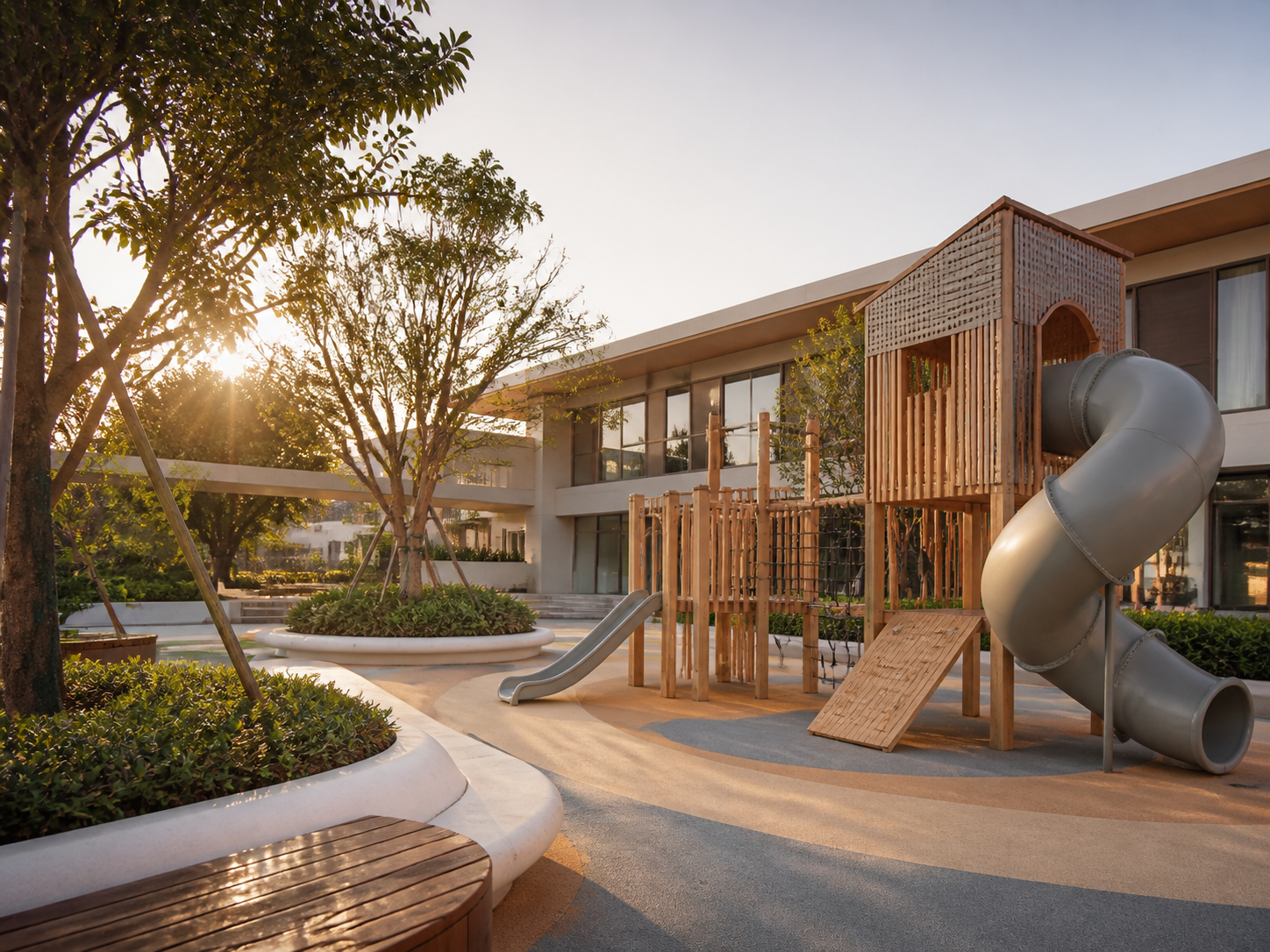
Property developers usually compare playground design as part of a wider question about what kind of family, community, or lifestyle value the project should create. The strongest design decisions are rarely only visual. They are usually tied to who will use the space, what role it plays in the asset, and how it will be maintained over time.
That means a more useful comparison starts with project role and user behavior, not only equipment style.
Why design comparison matters for developers
A developer may be planning for:
- residential family appeal
- mixed-use destination value
- public or semi-public common areas
- hospitality or leisure positioning
- long-term placemaking
In each of these cases, the design logic changes. The supplier should be able to explain why the concept fits the property, not simply present a catalogue.
What property developers usually compare first
### 1. Project role
Developers often ask:
- Is the playground an amenity, a destination, or a placemaking tool?
- Is it meant to support family traffic, lifestyle value, or public activity?
- Does it serve private, semi-private, or open use?
### 2. Indoor vs outdoor logic
Design choices depend heavily on:
- climate
- site visibility
- available footprint
- public access
- maintenance realities
### 3. User mix
The right design depends on who is expected to use the space:
- residents
- visiting families
- hotel guests
- retail visitors
- mixed public users
### 4. Lifecycle practicality
Developers also compare:
- durability
- ease of maintenance
- operating burden
- whether the long-term owner can realistically support the design
Questions to ask before final concept review
- What commercial or placemaking role should the playground serve?
- Which format best fits the project and user mix?
- What maintenance and operating logic will exist after completion?
- Which design choices are most realistic for long-term use?
- Can the supplier support concept refinement before procurement?
FAQ
### Why should property developers compare playground design differently from single-site operators?
Because developers usually need to think about asset positioning, placemaking, long-term ownership, and the broader role of the space in the project.
### Should design decisions come after supplier shortlisting?
The better process is usually iterative. Stronger design comparison helps developers shortlist suppliers more effectively.
CTA
If your team is comparing playground design options, start with the role the play area should serve inside the property, then compare supplier concepts against that goal.
Related pages
- Playground Equipment for Real Estate Developers
- Playground Supplier Questionnaire for Developers
- Project Planning
- Contact Us
Best next pages for developer design planning: