Playground Equipment for Mixed-Use Developments: What Buyers Should Compare
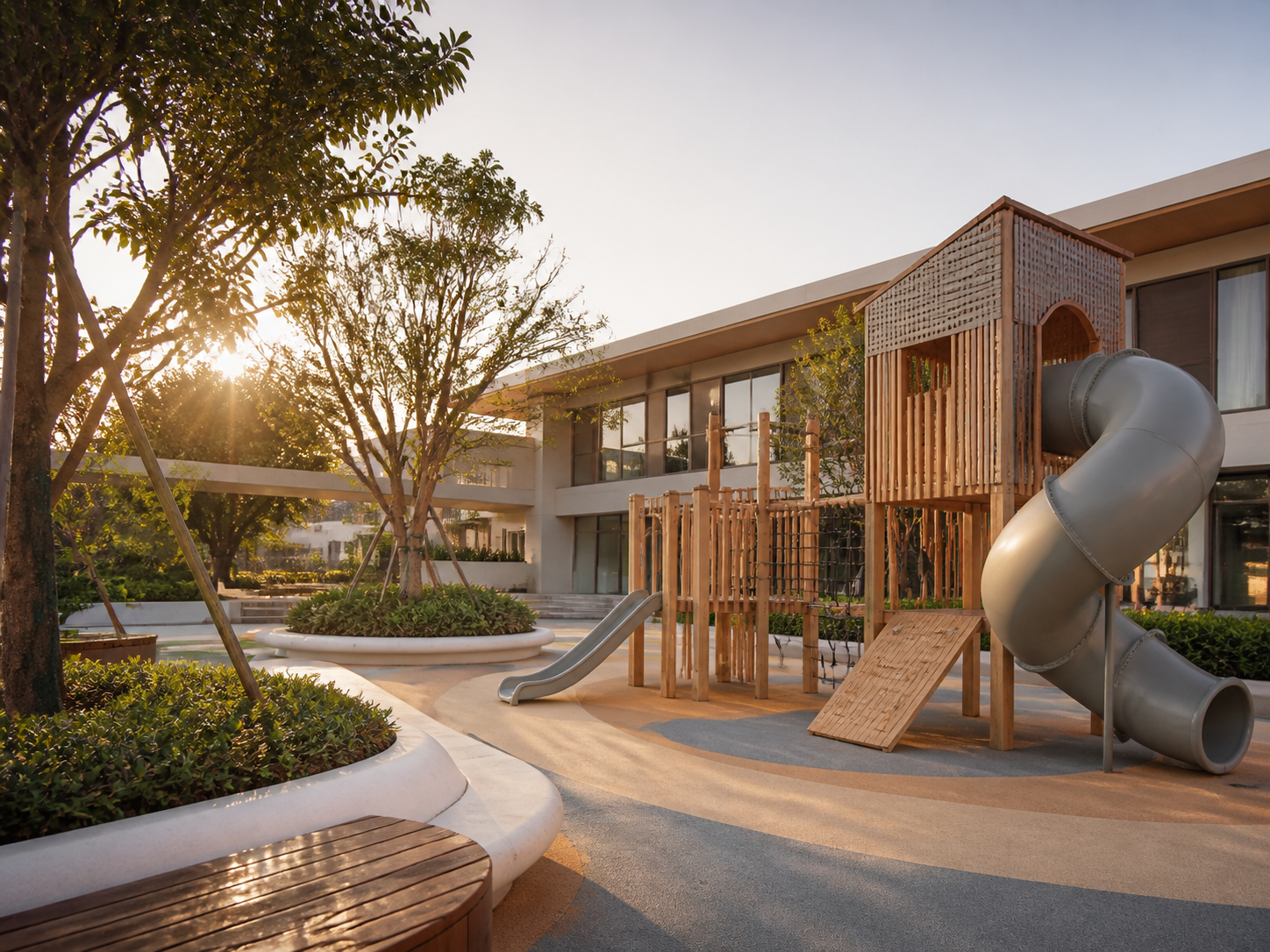
Mixed-use developments often compare playground equipment as part of a broader placemaking and family-positioning strategy. The decision is not only about what children will enjoy. It is about how a play area supports community use, destination identity, family traffic, leasing value, and the long-term commercial logic of the project.
That is why buyers usually need a more strategic comparison than a simple product list.
Why mixed-use projects need a broader comparison
A mixed-use development may include combinations of:
- retail
- residential
- hospitality
- leisure
- public or semi-public circulation
This means the play strategy often needs to support multiple user groups instead of only one venue type. Buyers often need to compare whether the right answer is:
- indoor family play
- outdoor playground equipment
- water play
- a compact family zone
- a mixed play-and-leisure concept
What mixed-use buyers usually compare first
### 1. Commercial role
The first question is often: what should the play area do for the development?
Common answers include:
- strengthen family destination value
- support residential lifestyle positioning
- improve retail traffic
- create a more community-friendly public realm
- support hotel or leisure components
### 2. Indoor vs outdoor fit
Mixed-use developers often compare:
- climate implications
- public visibility
- circulation impact
- maintenance practicality
- whether the zone is best placed indoors, outdoors, or across both
### 3. Operating responsibility
One of the most important questions is who will operate, inspect, and maintain the area. Buyers often compare:
- maintenance burden
- public-use wear
- supervision expectations
- whether the concept is realistic for the eventual operator
### 4. Installation and timing
Developers also compare:
- project sequencing
- access constraints
- how play equipment fits the wider build program
- whether the supplier can support concept-stage refinement before final procurement
Questions to ask before early budgeting
- What role should the play area serve inside the development?
- Is the best answer indoor, outdoor, water play, or a hybrid concept?
- Which format creates family value without creating too much operating friction?
- How should the concept differ if hospitality or residential components are stronger?
- Can the supplier support early-stage concept planning?
Common mistakes in mixed-use play planning
Developers often make weaker decisions when they:
- treat play as an isolated product purchase
- copy concepts from unrelated assets
- focus only on appearance
- ignore long-term operating ownership
The stronger comparison usually asks how the play zone will actually function within the development’s broader business and user model.
FAQ
### What type of play format works best in mixed-use developments?
There is no single answer. The best format depends on the balance of retail, residential, hospitality, public access, climate, and family positioning.
### Should mixed-use developers start with products or project role?
The better starting point is usually the project role: what the play zone should do for the development. Product categories come after that.
### Why is operating responsibility so important?
Because a visually appealing concept can become a poor long-term decision if maintenance, supervision, and public-use wear were not evaluated early.
CTA
If you are planning play equipment inside a mixed-use project, compare the business role of the play area before moving into final quotation.