Residential Playground Design Brief for Developers: What to Clarify Early
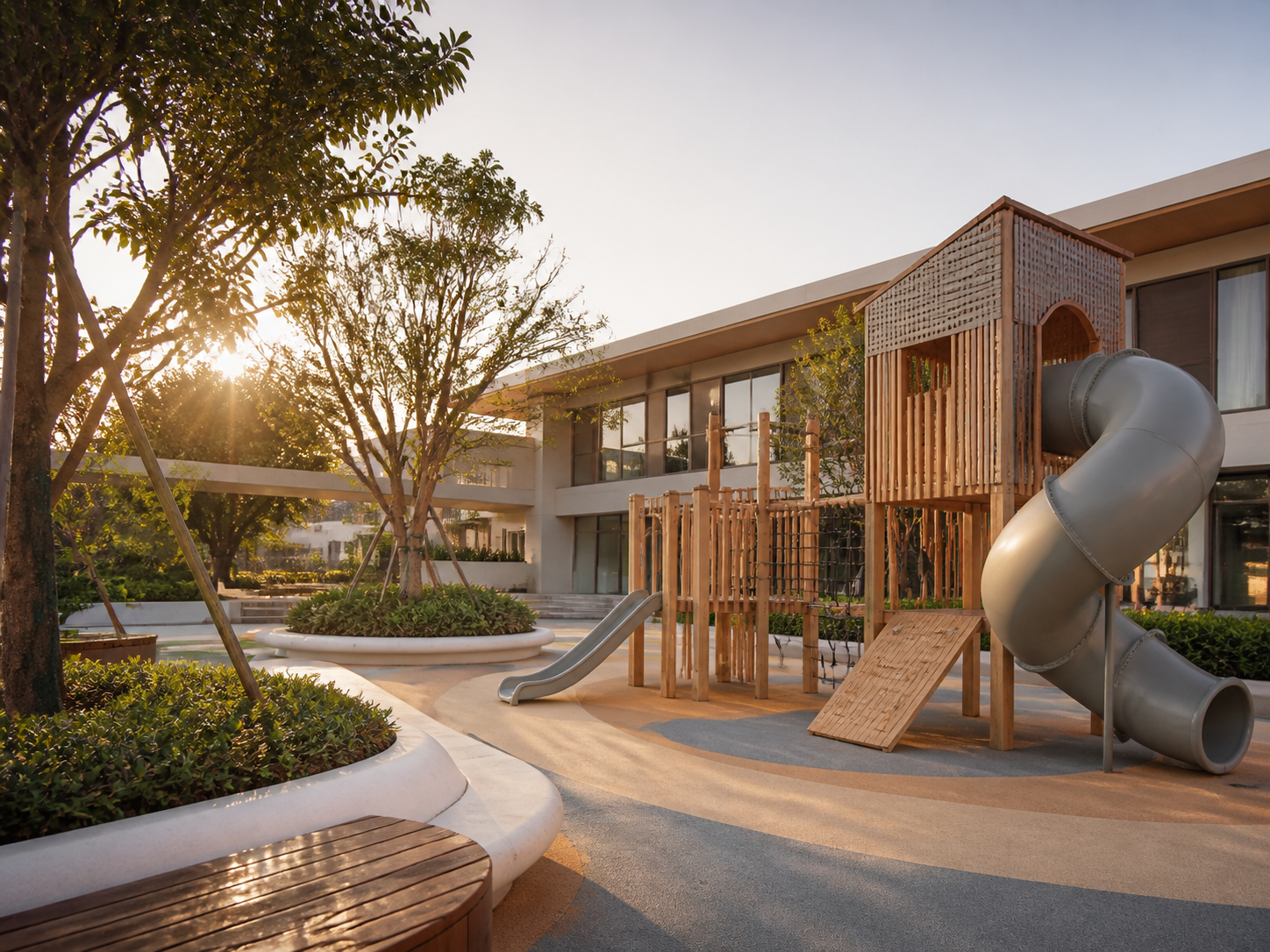
Residential playground projects often become harder than they need to be because the design brief is too vague at the beginning. Developers may ask for concepts before the role of the space, user mix, maintenance expectations, and operating assumptions are clear enough.
A stronger brief usually produces stronger supplier comparison, better concepts, and fewer misaligned proposals.
Why the design brief matters
The design brief shapes:
- what kind of play space suppliers propose
- whether the concept fits resident behavior
- how supervision and circulation are handled
- whether maintenance remains practical long term
Without a clear brief, buyers often end up comparing ideas that are solving different problems.
What developers should clarify first
### 1. Amenity role
Define whether the space is meant to support:
- family positioning
- resident lifestyle value
- courtyard activation
- community identity
### 2. User mix
Clarify:
- age ranges
- resident-only versus semi-public use
- how family behavior is expected to work in the space
### 3. Supervision and circulation
Compare whether the concept should prioritize:
- visibility
- calm family use
- active movement
- integration into a wider landscape plan
### 4. Maintenance expectations
Developers should define:
- who maintains the space
- how much upkeep is realistic
- whether the operator is a property manager, HOA, or another long-term party
Questions to include in the brief
- What role should this playground serve in the project?
- Who will use and supervise the space?
- What maintenance model is realistic long term?
- Should the concept feel compact, social, active, or mixed?
- What should suppliers know before proposing layouts?
FAQ
### Why do residential projects need a stronger design brief than a simple quote request?
Because the wrong assumptions early can lead to concepts that do not match the real user mix or long-term operating model.
### What makes a residential playground brief stronger?
A stronger brief defines role, users, supervision, maintenance, and the broader amenity purpose of the space.
CTA
If your team is reviewing residential playground concepts, strengthen the design brief first so suppliers respond to the same project logic.