The trampoline park industry is booming — and for good reason. Whether you are an entrepreneur searching for a high-return family entertainment concept, a mall developer looking to anchor foot traffic, or an investor diversifying into experiential leisure, a trampoline park offers one of the most compelling ROI profiles in the indoor entertainment sector. This guide covers everything you need to know before you invest, including real cost figures, revenue benchmarks and how to find the right commercial trampoline equipment supplier.
Is a Trampoline Park Still a Good Investment in 2026?
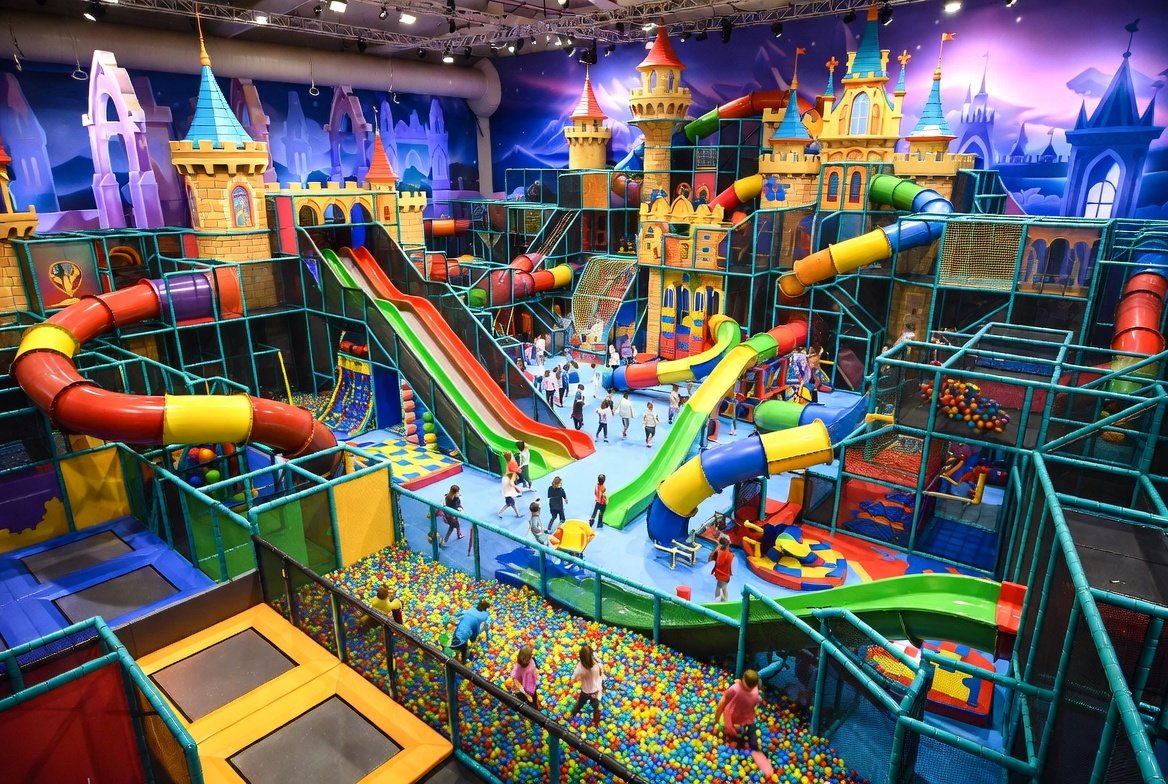
The short answer is yes — if you plan correctly. The global trampoline park market is projected to reach $3.96 billion by 2032, driven by increasing demand for family-friendly entertainment and fitness activities. Trampoline parks have evolved far beyond simple jump floors into multi-attraction family entertainment centers (FECs) featuring ninja courses, foam pits, climbing walls, dodgeball courts and interactive games.
Well-managed trampoline parks typically achieve EBITDA profit margins of 25% to 35% — significantly higher than traditional retail or fitness businesses. Average annual revenue for an indoor trampoline park ranges from $1 million to $3 million, depending on size, location and attraction mix. For investors who choose the right location, design an efficient layout and source equipment at competitive prices, the return on investment is compelling.
Trampoline Park Startup Costs: What Does It Really Cost?
One of the most common questions from first-time investors is: how much does it cost to open a trampoline park? The honest answer is that it depends significantly on park size, location and the attractions you include. Here is a realistic breakdown based on current industry data:
- Small park (500–1,000 sqm): Total investment from $100,000 to $350,000, including equipment, fit-out and pre-opening costs
- Standard commercial park (1,000–2,000 sqm): Total investment from $350,000 to $800,000
- Large flagship venue (2,000+ sqm): Total investment from $800,000 to $2,500,000+
Equipment typically represents 40–60% of total startup costs, making your choice of trampoline park equipment supplier one of the most financially significant decisions you will make. Sourcing equipment factory-direct from a manufacturer like PlayStructureGroup — rather than through a local distributor — can reduce equipment costs by 30–50%, dramatically improving your break-even timeline.
A well-planned trampoline park typically reaches break-even within 12 to 30 months, depending on location, pricing and operational efficiency.
Trampoline Park Revenue Streams: Beyond the Jump Ticket
The most profitable trampoline parks do not rely on single-ticket admission alone. Building a diversified revenue model is essential to maximizing EBITDA and protecting the business against slow periods. Key revenue streams include:
- General admission jump sessions — the volume engine, typically priced at $10–$25 per hour depending on market
- Birthday party packages — the highest-value revenue stream, with premium pricing for exclusive zone hire, catering and party hosts
- Corporate and group events — team-building bookings that generate large single-transaction revenue
- Membership and season passes — convert repeat visitors into recurring monthly revenue
- Ancillary sales — grip socks, concessions and merchandise, which often carry margins of 50% or more
- Kids fitness classes and coaching — structured programs that fill off-peak hours with premium-priced sessions
Key Trampoline Park Equipment Categories
The attraction mix you choose directly determines your revenue potential, visitor dwell time and competitive positioning. When working with a commercial trampoline equipment manufacturer, these are the core product categories to consider:
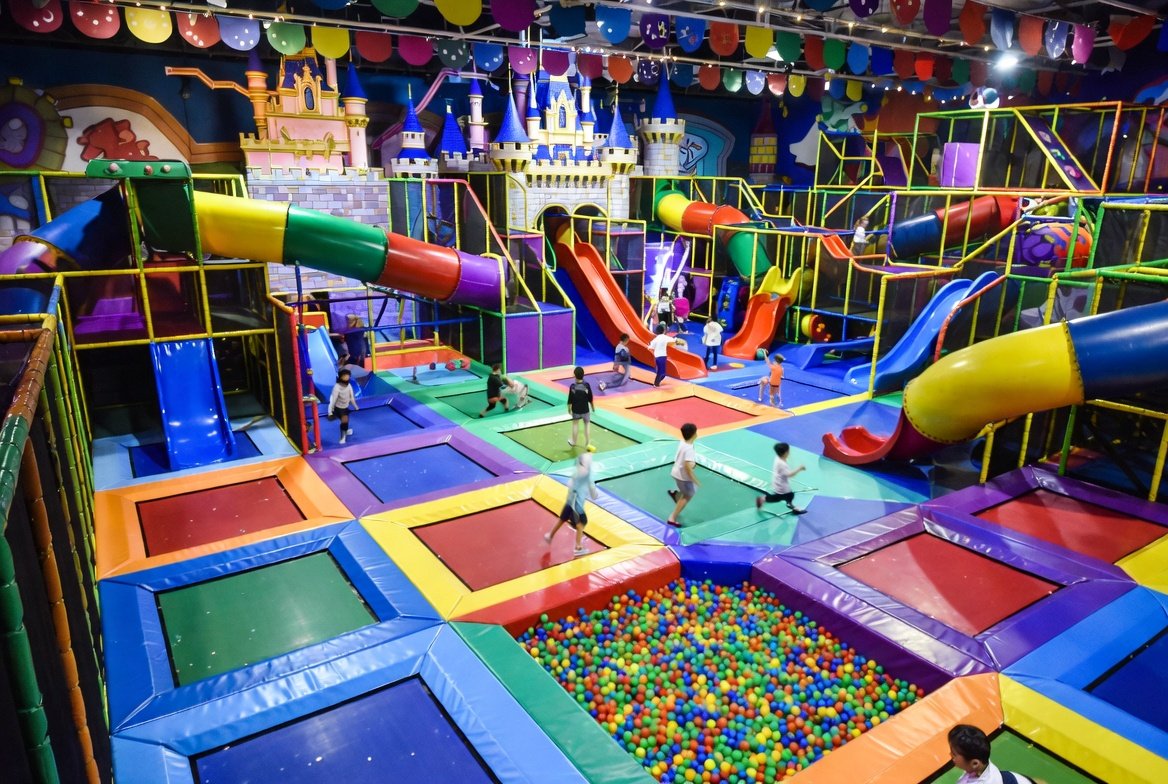
- Free jump trampolines — wall-to-wall interconnected jump surfaces, the foundational attraction of any trampoline park
- Foam pit jump towers — high-visibility, high-excitement structures that extend dwell time and drive social media content
- Ninja warrior courses — obstacle courses inspired by competitive ninja formats, extremely popular with older children and adults
- Dodgeball courts — structured activity zones that create natural group bookings and corporate event demand
- Climbing walls and bouldering zones — premium attractions that differentiate your venue from basic jump parks
- Kids soft play zones — dedicated areas for younger children, allowing parents to bring toddlers alongside older kids
- Basketball slam dunk lanes — low-cost, high-appeal attractions that add variety without significant floor space
Safety Standards for Trampoline Park Equipment
Safety is the most critical non-negotiable in the trampoline park business. A single serious injury can result in closure, litigation and irreversible reputational damage. When sourcing trampoline park equipment, insist on suppliers who manufacture to recognized international safety standards:
- ASTM F2970 — the American standard for trampoline court safety, the most widely referenced standard globally for commercial jump parks
- EN 13219 — the European standard for domestic trampolines, widely referenced for commercial padding and enclosure requirements
- ISO 9001 — quality management systems certification covering the entire manufacturing process
- GS Certification — Germany’s rigorous product safety mark, respected globally as a premium safety credential
PlayStructureGroup manufactures all trampoline park equipment to ISO9001 and GS certification standards, with full documentation provided for every project. This is essential for venue licensing, insurance and ongoing regulatory compliance.
How to Choose a Trampoline Park Equipment Supplier
The global market for trampoline park suppliers ranges from premium Western manufacturers to budget factories with no certification. Choosing the wrong supplier is the most expensive mistake a trampoline park investor can make. Here is a framework for evaluating any supplier before committing:
- Certification documentation — request physical copies of all certifications and verify independently
- Reference projects — ask for a list of completed parks you can contact directly
- Design capability — a qualified supplier should offer free 3D layout planning, not just a catalogue
- Manufacturing capacity — visit the factory or request a video tour; understand lead times and quality control processes
- Logistics experience — international shipping of trampoline equipment is complex; your supplier should have proven export capability
- After-sales support — spare parts availability, installation guidance and maintenance support are critical for long-term operations
Why Investors Choose PlayStructureGroup for Trampoline Park Projects
PlayStructureGroup has delivered trampoline park and indoor entertainment projects across Africa, the Middle East, Southeast Asia and beyond. With 15+ years of manufacturing experience, ISO9001 and GS certification, and a team of over 200 professionals, we provide factory-direct pricing with no distributor markup — typically saving investors 30–50% on equipment costs compared to Western suppliers.
Every project includes free 3D design and layout planning, certified equipment manufacturing, global logistics coordination and structured after-sales support.
Start Your Trampoline Park Project Today
Whether you are at the concept stage or ready to buy trampoline park equipment, our project team is ready to help. Contact PlayStructureGroup via WhatsApp at +33 7 6871 66 82 or through our website contact form. Tell us your venue size, location and budget — and we will respond within 24 hours with a tailored equipment proposal and free layout design.