Shopping center buyers comparing an indoor trampoline supplier are usually not asking only which equipment looks exciting. They are trying to decide whether a trampoline-led family attraction can improve family traffic, dwell time, and destination value without creating too much operating friction inside the mall.
Quick answer for mall buyers
If you are comparing an indoor trampoline supplier for a shopping center, first decide whether the attraction should be a compact family add-on, a hybrid FEC zone, or a dedicated ticketed venue. Then compare visibility, usable capacity, supervision, neighbor impact, fit-out access, installation scope, maintenance, and the operator model. The right supplier should connect the attraction to mall operations, not only fill a floor plan with equipment.
Who this page is for
- Shopping mall operators
- Retail destination managers
- Mixed-use developers with family retail zones
- FEC buyers evaluating trampoline inside a broader offer
- Commercial teams reviewing family-traffic anchors
What shopping center buyers usually compare first
Mall buyers often review:
- target age range
- open attraction versus ticketed venue model
- circulation and visibility
- supervision needs
- maintenance burden
- installation timing
- whether the concept supports family traffic and tenant value
Why trampoline projects need a mall-specific supplier lens
A trampoline-led family zone in a shopping center is not the same as a stand-alone trampoline park.
Mall buyers usually need to compare:
- whether the concept is best as a compact family attraction or a larger dedicated venue
- how visible the attraction will be from the surrounding commercial zone
- whether the supplier understands retail traffic patterns
- how the format supports dwell time and repeat visits
- what operating burden is created after opening
Supplier comparison table for shopping centers
| Comparison area | What buyers should ask | Why it matters |
|---|---|---|
| Mall traffic fit | Does the concept support casual family traffic or destination visits? | This changes size, ticketing, and layout logic. |
| Layout and visibility | Can parents and staff read the attraction easily from the mall edge? | Visibility affects comfort, supervision, and conversion. |
| Supervision | How many staff positions are likely needed at peak time? | Supervision pressure affects real operating cost. |
| Installation scope | What fit-out, access, and ceiling assumptions are included? | Malls often create more delivery and coordination constraints. |
| Family appeal | Does the attraction help dwell time without overwhelming the venue? | Buyers need traffic value, not just novelty. |
| Operator fit | Is the format right for a mall team, FEC operator, or tenant-led partner? | Different operator models need different attraction scale. |
Questions to ask before requesting pricing
- Is an indoor trampoline concept the right fit for this shopping center?
- Should the project be compact, hybrid, or venue-led?
- How much supervision and visibility does the layout require?
- Which features improve family appeal without overloading operations?
- Can the supplier support early concept planning before final budgeting?
A mall-specific project brief
Provide the same information to every supplier:
- leased area and a dimensioned plan
- clear height, columns, shopfront, exits, and back-of-house access
- expected family traffic and target age range
- intended operator and ticketing model
- normal and peak opening hours
- relationship to FEC, arcade, food, party, or retail uses
- landlord fit-out rules and working-hour restrictions
- acoustic, fire, structural, electrical, and mechanical coordination contacts
- goods lift, loading bay, unloading, and material-route limits
- opening target and landlord handover dates
- budget range and required split between equipment, freight, installation, and local works
This information does not replace local design approvals. It gives suppliers enough context to produce concepts that can be compared responsibly.
Mall approval issues to identify early
Visibility and shopfront
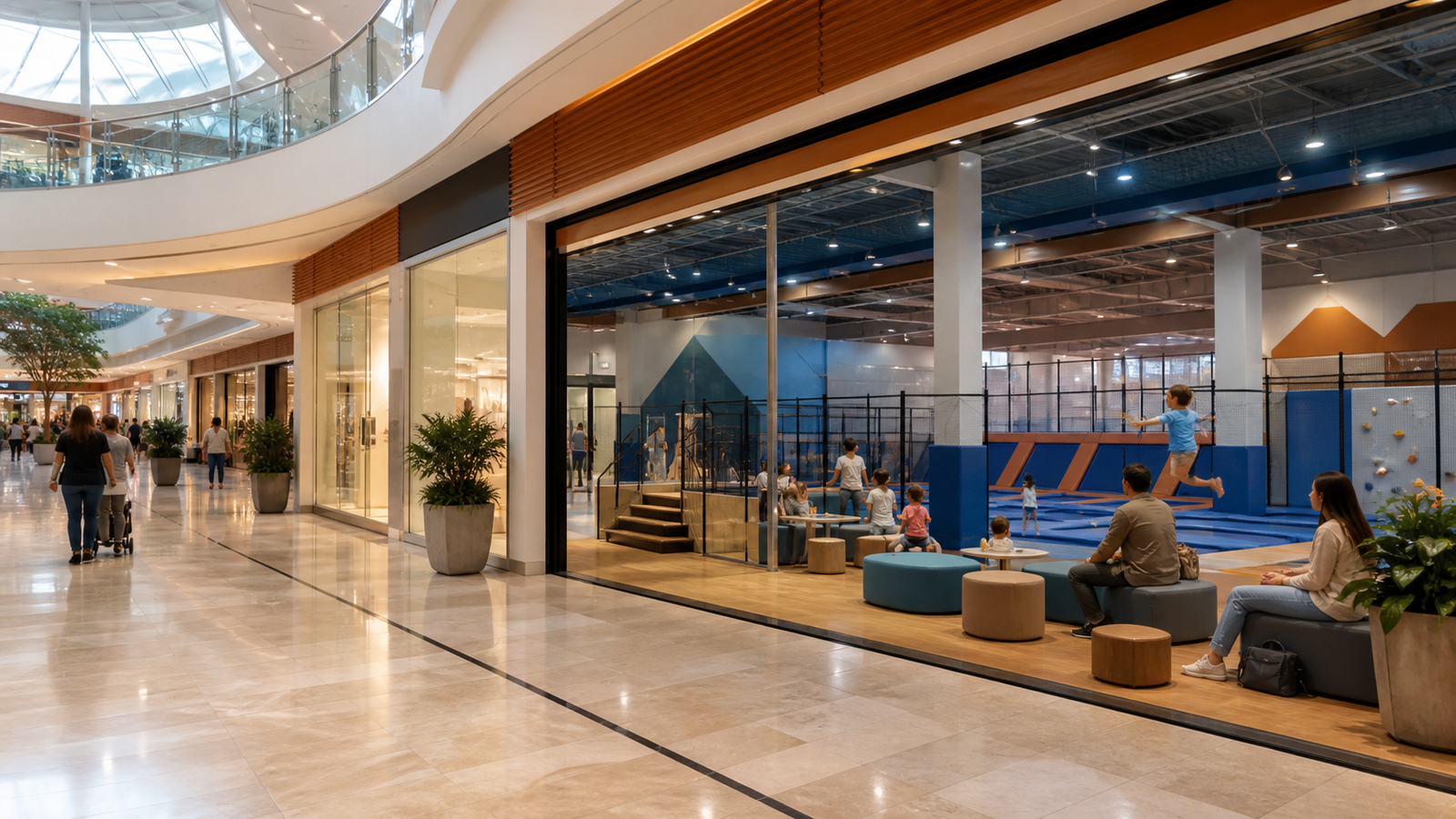
An open, visible family attraction may convert passing traffic, while a controlled ticketed venue may need clearer entry, queuing, and waiver areas. The concept should show what visitors see from the main mall route and how the shopfront supports the operating model.
Acoustic and neighbor impact
Active entertainment can affect adjacent tenants and upper or lower levels. Ask the landlord and relevant consultants what information is required for acoustic, vibration, structural, fire, and building-services review. Do not rely on a generic equipment proposal to settle project-specific building questions.
Loading and installation access
Mall access windows, lift dimensions, loading routes, ceiling services, and completed finishes can materially change the installation plan. Suppliers should identify package sizes, access assumptions, storage needs, and sequencing before final scope approval.
Fire and egress coordination
Equipment layouts must respect the project team’s approved fire and egress strategy. Ask how tall or enclosed elements will be coordinated with exits, sprinklers, detectors, signage, and emergency access.
From family traffic to a workable operating model
The attraction should support a defined buyer goal:
| Mall objective | Design implication |
|---|---|
| Increase family dwell time | Comfortable parent areas and an age mix that supports longer visits |
| Create a destination tenant | Stronger identity, ticketing, capacity, parties, and repeat-visit planning |
| Add activity to an existing FEC | Shared reception, circulation, staffing, and cross-attraction logic |
| Activate a smaller vacant unit | Compact zones, controlled capacity, simpler staffing, and clear visibility |
| Support mixed-use placemaking | Integration with food, seating, public realm, and family circulation |
The supplier should explain which objective the concept is designed to support.
Best fit by mall project type
Compact family attraction
Best for centers that need a lighter family anchor with simpler operating pressure.
Dedicated trampoline venue
Best for destinations that want a stronger ticketed attraction and can support more supervision and staffing.
Hybrid family zone
Best for projects combining trampoline with soft play, party rooms, or wider family entertainment positioning.
Common mistakes mall buyers make
- comparing trampoline layouts without checking supervision assumptions
- focusing on attraction excitement but ignoring mall circulation
- asking for price before ceiling height and floor area are clear
- treating a shopping-center format like a stand-alone trampoline park
- ignoring the operating difference between compact and venue-led concepts
- treating landlord approvals as a late installation issue
- comparing supplier prices before confirming whether quotations include the same scope
Compare the full commercial scope
Ask each supplier to classify the following as included, excluded, allowance, or buyer-provided:
| Scope item | Why it changes the comparison |
|---|---|
| Concept and technical design | Revision limits and approval support may differ |
| Equipment and protective systems | Product lists may describe different zone sizes or specifications |
| Freight and destination charges | Shipping assumptions can materially affect landed cost |
| Unloading and internal transport | Mall routes and access hours may require special planning |
| Installation and supervision | Labor, travel, accommodation, tools, and access equipment may be separated |
| Local construction and services | Flooring, power, fire, structural, and fit-out work are often outside equipment scope |
| Testing, training, and handover | Deliverables should be named rather than assumed |
| Spare parts and maintenance support | Initial stock and response process affect opening readiness |
Operating cost and conversion questions
Before approving the concept, test it against real operations:
- How many staff positions are needed when the venue is quiet and when it is full?
- Can parents understand the entrance, rules, and waiting areas quickly?
- Does party traffic conflict with normal guest circulation?
- Can high-wear areas be inspected or repaired without closing the whole venue?
- Is the capacity assumption compatible with reception, briefing, lockers, and seating?
- Does the attraction offer enough reasons to return without depending on excessive feature count?
These questions make the supplier conversation more useful and improve the quality of the RFQ.
Related pages
- Trampoline Park Equipment Supplier
- Trampoline Layout Planning for Shopping Malls
- Trampoline Park Design Checklist for Mall Operators
- Shopping Mall Playground Equipment
- Contact Us
FAQ
Is an indoor trampoline concept always the best fit for a shopping center?
No. Some malls benefit more from compact indoor playground or hybrid family zones than from a trampoline-led format.
What matters more, attraction size or operator fit?
For many malls, operator fit matters more, because supervision, visibility, staffing, and turnover affect long-term performance.
Should mall buyers request pricing before the concept is clear?
Usually no. A clearer brief produces a better supplier comparison and a more useful quotation discussion.
What is the minimum ceiling height for an indoor trampoline attraction?
There is no single answer for every design. Required clear height depends on activity type, product design, user profile, building services, and applicable requirements. Share measured clear heights and obstructions before asking a supplier to propose zones.
Can a compact trampoline zone work inside an existing FEC?
It can when the layout, controlled access, staffing, guest flow, and maintenance plan support it. A compact zone should still be evaluated as an operating system, not a decorative add-on.
What should a mall buyer send before requesting a quote?
Send a dimensioned plan, clear height, columns and exits, shopfront and access information, target age mix, operator model, attraction priorities, country, opening target, and a request for clear inclusions and exclusions.
Discuss your project
Need to compare an indoor trampoline supplier for a shopping center? Share the dimensioned unit plan, clear height, country, target audience, operator model, attraction priorities, opening target, and budget range. We can help turn those inputs into a clearer supplier brief and quotation comparison.