An indoor family entertainment center for shopping malls is no longer a nice extra. In 2026, it is one of the most effective ways to increase family foot traffic, extend dwell time and improve tenant performance. As e-commerce continues to pressure traditional retail, mall operators are investing in destination experiences that cannot be replicated online. A well-designed indoor playground for shopping malls does exactly that.
This guide explains how mall developers, leasing teams and FEC investors can plan a profitable indoor play project, choose the right equipment, estimate costs and select a reliable supplier. If you are evaluating a soft play zone, a full multi-level playground or a hybrid family entertainment concept, the sections below will help you plan with more confidence.
Why Indoor Family Entertainment Centers Matter for Malls in 2026
Malls need repeat reasons for families to return. A strong family entertainment offer improves weekday traffic, supports food and beverage tenants and gives parents a practical reason to stay longer. Unlike a pop-up promotion, an indoor playground becomes a permanent traffic generator that also strengthens the mall’s brand positioning.
For developers, the value of a mall-based FEC usually appears in four places:
- Higher footfall: families will travel for quality children’s play attractions
- Longer dwell time: visitors stay for play, meals, shopping and social time rather than making a quick errand trip
- Better tenant sales: restaurants, cafes, toy stores and service brands benefit from nearby family traffic
- Stronger differentiation: entertainment-led malls stand out in highly competitive retail markets
What Is an Indoor Family Entertainment Center?
An indoor family entertainment center can range from a compact children’s playground to a large multi-zone venue with soft play, climbing, slides, trampoline elements, party rooms and a cafe. In mall environments, the most successful formats combine strong visual appeal with clear age zoning and efficient use of vertical space.
Typical mall FEC components include:
- Soft play structures with tunnels, decks, punch bags and crawl spaces
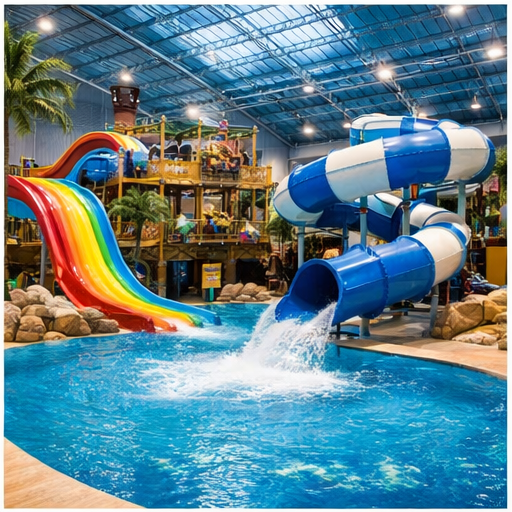
- Slides such as wave slides, spiral slides and toddler slides
- Ball pit zones for high-engagement family play
- Climbing and obstacle areas for older children
- Toddler areas with sensory and low-height equipment
- Party rooms for birthdays and private events
- Parent seating and cafe integration to improve comfort and spending
How Mall Playgrounds Increase Revenue
Most investors first ask about ROI. A mall indoor playground typically combines several revenue streams rather than relying on admission alone. This is why the model can perform so well even in premium commercial locations.
- General admission: daily entry fees remain the core driver of volume
- Birthday parties: these are often the highest-margin revenue line in the venue
- Memberships: recurring plans improve customer retention and cash flow
- Food and beverage: cafes and snack zones capture parent spending
- Seasonal events: school holidays, mall campaigns and branded events create extra demand
For mall owners who lease space to operators, the benefit is broader than rent. A good entertainment anchor strengthens overall property performance by improving family conversion in adjacent zones.
How to Design a High-Performing Indoor Playground for a Shopping Mall
1. Use Layout to Maximize Visibility
The playground should be easy to see from a distance. Open sightlines, strong color contrast and one signature visual feature help the venue stop traffic. If shoppers cannot immediately understand the attraction, conversion drops. Many successful venues place the main slide, tower or feature facade where it is visible from the central circulation path.
2. Plan by Age Group
Different age groups use play equipment differently. Toddlers need soft, low-height and parent-visible zones. Children aged 3 to 6 respond well to compact soft play, slides and ball areas. Older children need more challenge: climbing, obstacle routes, rope bridges and movement-based play. Clear zoning improves both safety and family satisfaction.
3. Build Vertically
Commercial rent is expensive. A multi-level structure lets you increase play value without expanding the lease area. This is why commercial indoor playground equipment for malls often emphasizes platforms, stacked routes and vertical play towers.
4. Include Comfortable Parent Areas
Parents decide how long families stay. Comfortable seating, clean visibility, charging points and nearby drinks or snacks all improve dwell time. A parent-friendly venue often produces higher repeat rates than a playground focused only on the child experience.
5. Reserve Space for Events
Party rooms, event corners and photo-friendly celebration areas can dramatically improve profit per square meter. Birthday business is one of the main reasons mall indoor playgrounds scale successfully.
Best Equipment Mix for Mall Indoor Playgrounds
Equipment should be selected not only for fun but also for durability, maintenance efficiency and repeat play value. The best-performing mix usually includes:
- Multi-level soft play equipment as the core attraction
- Slides and tunnels to drive movement through the structure
- Ball pits for broad age appeal and strong visual energy
- Interactive panels to add sensory and educational value
- Rope and obstacle elements to keep older children engaged
- Toddler-specific zones for family inclusiveness
- Optional trampoline or ninja elements when the target market supports more active play
PlayStructureGroup designs custom mall playground solutions based on site size, ceiling height, local market positioning and target age group. This matters because there is no single layout that fits every mall.
Safety Standards and Compliance for Mall Indoor Play Areas
Safety is a commercial issue as much as an operational one. Mall landlords, insurers and parents all look for evidence that the venue is professionally designed. Buyers should request product documentation and understand which standards apply in their market.
- EN 1176 is widely used as the benchmark for commercial playground equipment safety
- ASTM references may be required or preferred in some markets
- ISO 9001 helps demonstrate controlled manufacturing processes
- Fire performance and material documentation are essential for mall approval
- Installation manuals and maintenance guidance should be provided before handover
It is also important to think beyond equipment certificates. Entry flow, supervision points, evacuation routes, sock policy, cleaning routines and wear-part replacement schedules all influence whether the venue stays safe after opening.
Indoor Playground Cost Guide for Shopping Malls
Indoor playground cost depends mainly on size, customization level, theme complexity and the amount of supporting fit-out required. Equipment-only budgets are only one part of the full investment. Buyers should also consider flooring, storefront finishing, lighting, branding, POS systems, soft opening cost and staffing.
- Compact mall play zone: suitable for smaller community malls or support attractions
- Standard family entertainment center: the most common format for regional malls and mixed-use centers
- Premium themed FEC: larger footprint, stronger theming, dedicated party rooms and broader attraction mix
Factory-direct sourcing can improve budget efficiency, but only when the supplier also provides clear drawings, complete packing lists and installation support. A cheap quote without execution support often becomes expensive later.
How to Choose the Right Indoor Playground Equipment Supplier
When selecting a commercial indoor playground equipment manufacturer, mall developers should evaluate more than catalog appearance. Use this checklist:
- Can the supplier customize for your exact mall space?
- Do they provide 2D and 3D design support?
- Do they have mall project references?
- Can they explain safety standards and material details clearly?
- Do they support shipping, labeling and installation guidance for export projects?
- Is after-sales service practical and responsive?
A reliable supplier should help you shape the business model, not just sell equipment. This is particularly important when you need to balance play value, budget and mall-approval requirements.
Why Developers Work with PlayStructureGroup
PlayStructureGroup supplies indoor playground equipment for shopping malls, family entertainment centers, soft play venues and mixed-use commercial projects. We support concept development, custom design, production, export packing and installation guidance. Our solutions are built around the realities of commercial operation: durable materials, efficient layout, age zoning and strong visual appeal.
If you are planning a mall playground, our team can review your floor plan, ceiling height, target users and budget, then prepare a customized proposal with recommended equipment and a project quotation.
FAQ About Indoor Family Entertainment Centers for Shopping Malls
What size is best for a mall indoor playground?
There is no single answer. Smaller malls may perform well with a compact soft play zone, while regional malls often need a broader multi-level attraction with events and party space.
Can an indoor playground work on an upper floor?
Yes. In many malls, entertainment uses are intentionally placed on upper levels to drive vertical circulation and improve traffic distribution.
How long does production take?
Production depends on project size and customization. Custom-themed venues usually take longer than standard equipment packages.
What information is needed for a quotation?
Please share your mall location, available area, ceiling height, target age group, preferred style and budget range.
Ready to plan your project? Contact PlayStructureGroup for a custom proposal for your shopping mall indoor playground or family entertainment center.